SHARKS IN A CHANGING SEA
Off North Carolina’s “Graveyard of the Atlantic,” conservation biologist Dr. Carol Price works alongside longtime divers who have spent decades swimming with sand tiger sharks, exploring how local knowledge and community science can reshape shark conservation.
Director & Cinematographer: Lily Zhang | Runtime: 25:19 | 4K UHD | English | 2025
Stories from the Depth and the People Who Know Them
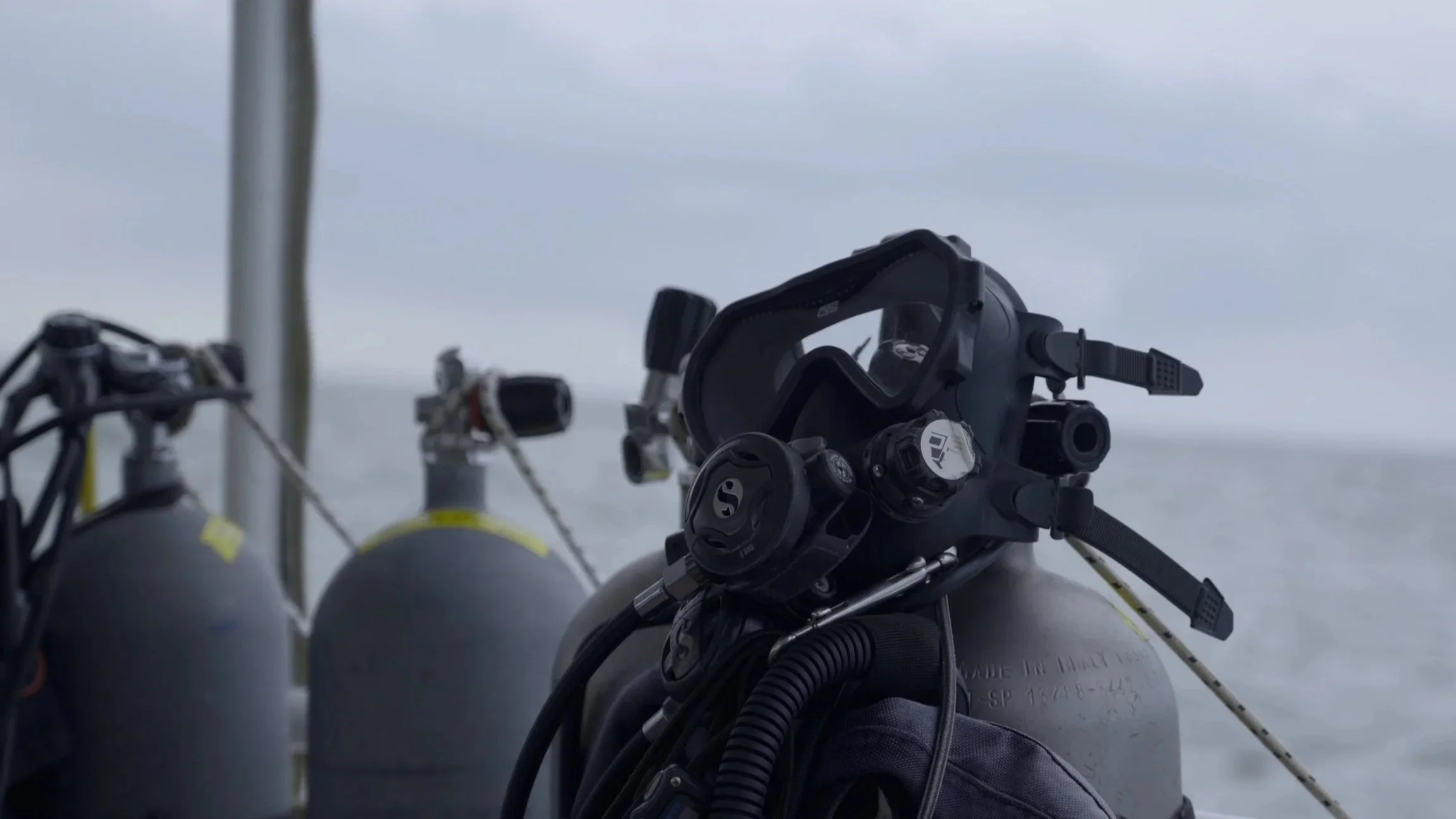
SYNOPSIS
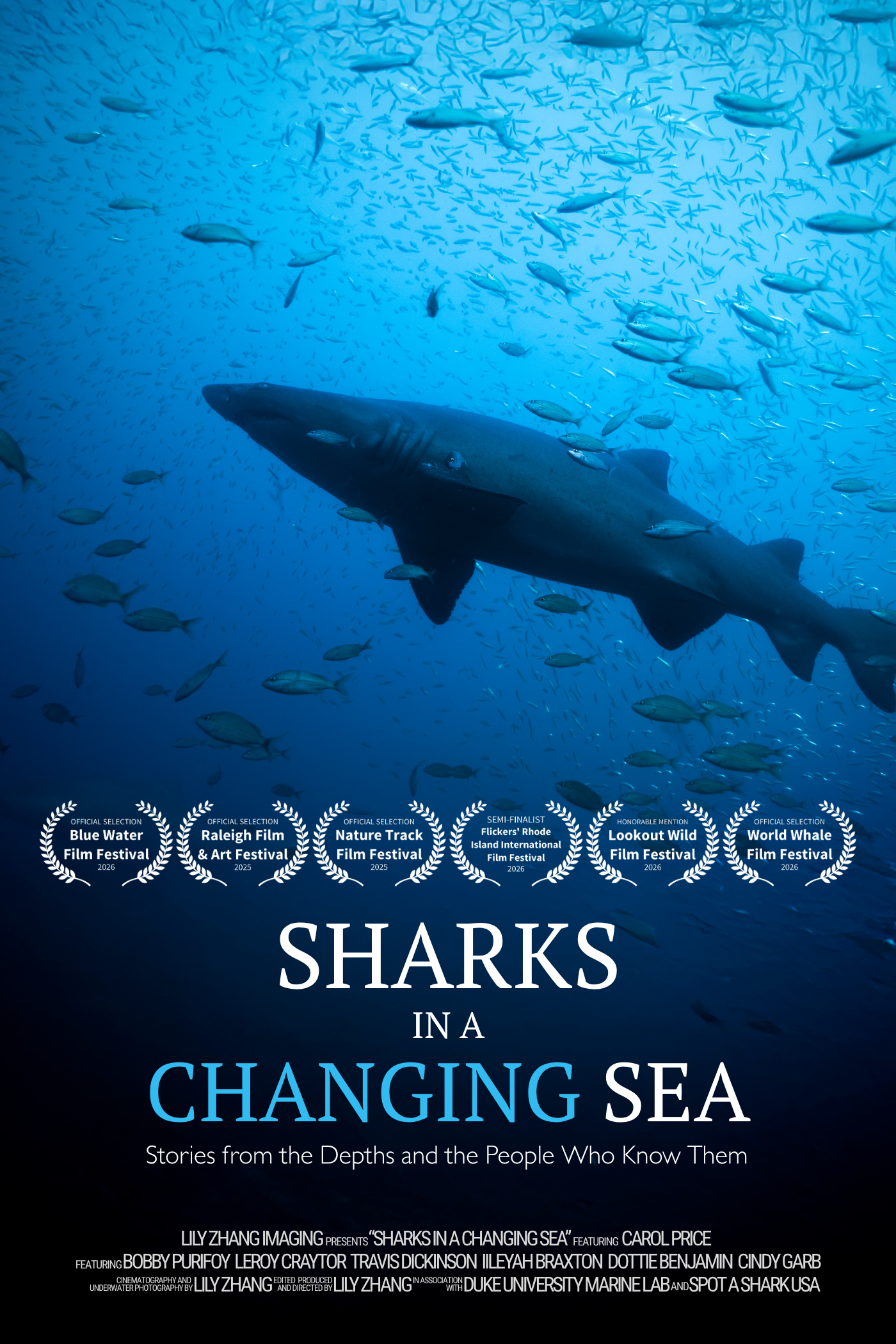
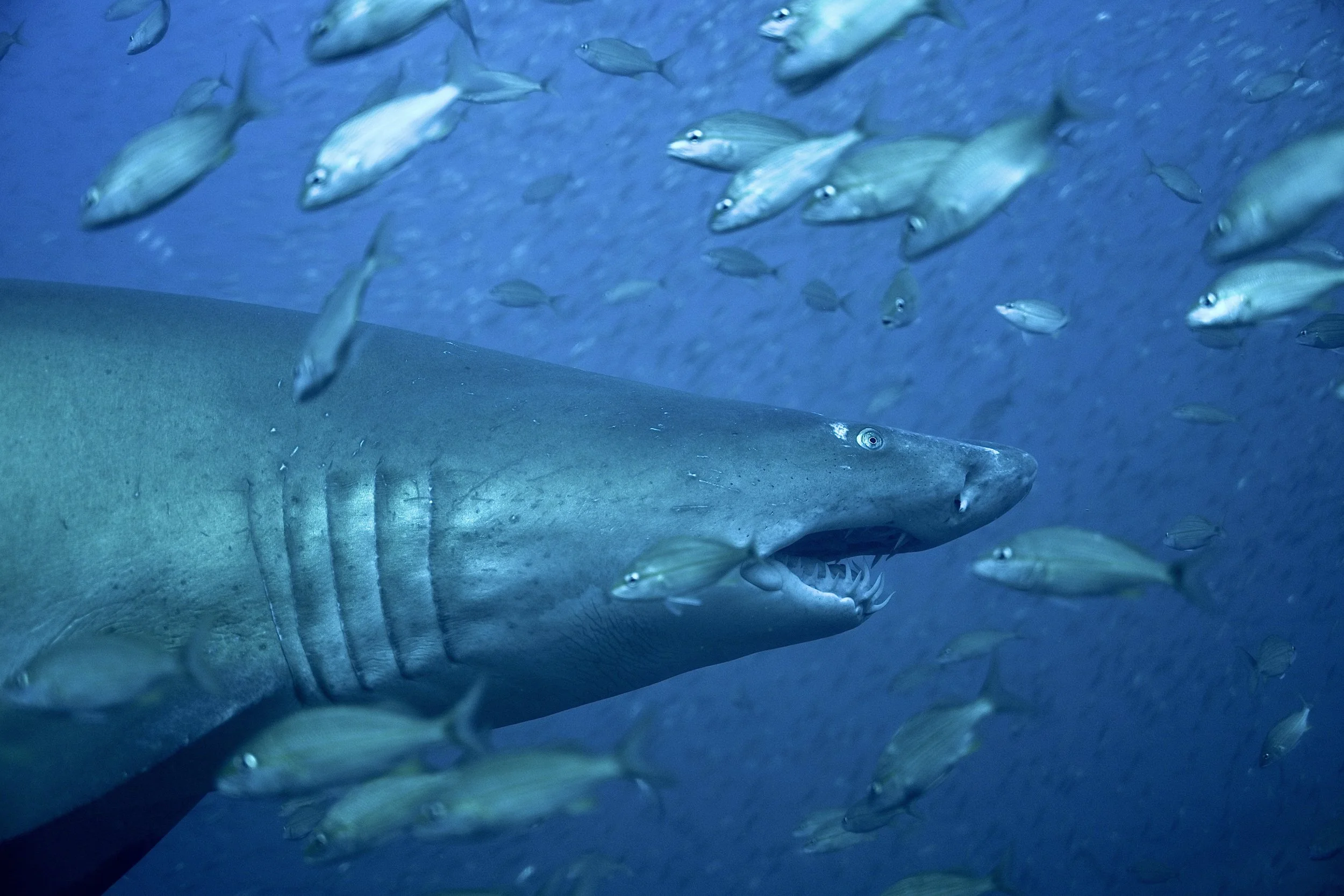
Off the coast of North Carolina, shipwrecks left behind by treacherous seas and deadly wars have found new life over the years, becoming thriving marine habitats of different marine life. This “Graveyard of the Atlantic” also draws one of the ocean’s top predators: sharks. Each year, groups of sand tiger sharks (Carcharias taurus) weave among the rusted metal structures, while a community of SCUBA divers returns to the same waters to swim alongside them.
Sharks in a Changing Sea follows conservation biologist Dr. Carol Price and longtime North Carolina divers, listening to their stories and observations of sharks accumulated over decades beneath the surface. Rarely captured in scientific literature or media, these experiences form a rich body of grassroots local knowledge about sharks and their home water. The Spot A Shark USA community science program turns some of these encounters into data, using divers’ photographs to support ongoing shark research and conservation. Through the divers’ narrations and immersive underwater footage, the film also challenges stereotypes of sharks and tries to reveal a quieter side of these intimidating-looking animals: calm, curious, and intelligent.
What has been misunderstood is not only the shark, but the unfinished conversation between humans and the natural world. As wildlife quietly adapts to our presence, can we also learn to coexist with them?
DIRECTOR’S STATEMENT
Fifty years ago, in June 1975, the blockbuster film Jaws was released. The film changed the way people saw sharks forever: as mindless predators lurking beneath the waves. Half a century later, on the same Atlantic coast, I found myself making a very different kind of shark film.
This film began as my Master's Project at Duke University. I originally planned to conduct interviews with North Carolina divers and explore how their long-term observations might support the community science program Spot A Shark USA. But when words like diving, photography, and sharks came together, they immediately sparked a much less academic thought: I wanted to make a shark documentary.
There was one obvious problem: I had never made a film before. In fact, almost everything that might have seemed routine to an experienced filmmaker became a problem I had to solve for the first time: from formulating interview questions to managing files in editing software. There were many moments when I genuinely had no idea whether the film would work at all. Even finding a title became one of those problems. Late one night, while sorting through hours of interviews, I began to realize that change was everywhere in this story. The collision of the Labrador Current and the Gulf Stream is carving the coastline, historic shipwrecks are transforming marine ecosystems, our knowledge base is increasing with more data and local wisdoms, and at a much larger scale, anthropogenic influences are reshaping the ocean as a whole. In this story, the only constant is change. That is how Sharks in a Changing Sea found its name.
I was changing, too.
Somewhat embarrassingly, despite six years of diving and underwater photography, I had barely encountered sharks myself. Yet I had never been particularly afraid of them. Making this film helped me realize why. I had spent years moving between two communities—the diving and academic worlds—sharks are generally understood very differently from the way they are portrayed in popular culture. I had taken that perspective for granted. Only through this project did I begin to understand how persistent the “man-eater” image remains in the public imagination, and how both storytelling and firsthand experience can shape the way we relate to wildlife. That realization influenced the visual language of the film. There are deliberately long and uninterrupted clips in this film, meant to recreate the privileged sense of calm and peace I felt while swimming alongside these sharks.
I gradually understand that the film was never only about sharks. It was also about the people. The human dimension eventually became important enough so I added a subtitle: Stories from the Depths and the People Who Know These Waters. This is also how this film differs from many previous shark films. Many focus primarily on the animals themselves, through scientific discovery, spectacle, or danger. This film centers the voices of North Carolina’s diving community, whose rich and layered knowledge has been built through years of returning to the same waters. In that sense, the film becomes as much a portrait of a community as it is a portrait of sharks.
The project left me thinking about what we do with the knowledge that comes from lived experience. For me, that question sits at the intersection of my two roles. As a researcher, I am interested in how local knowledge can be meaningfully incorporated into policy and conservation. As a communicator, I am equally interested in how those experiences can reach a wider public to share that passion and build awareness. Perhaps that is the deeper “change” at the heart of the film: changing the ways we know the ocean. How science and storytelling might work together to accelerate that change is a question I am still trying to answer.
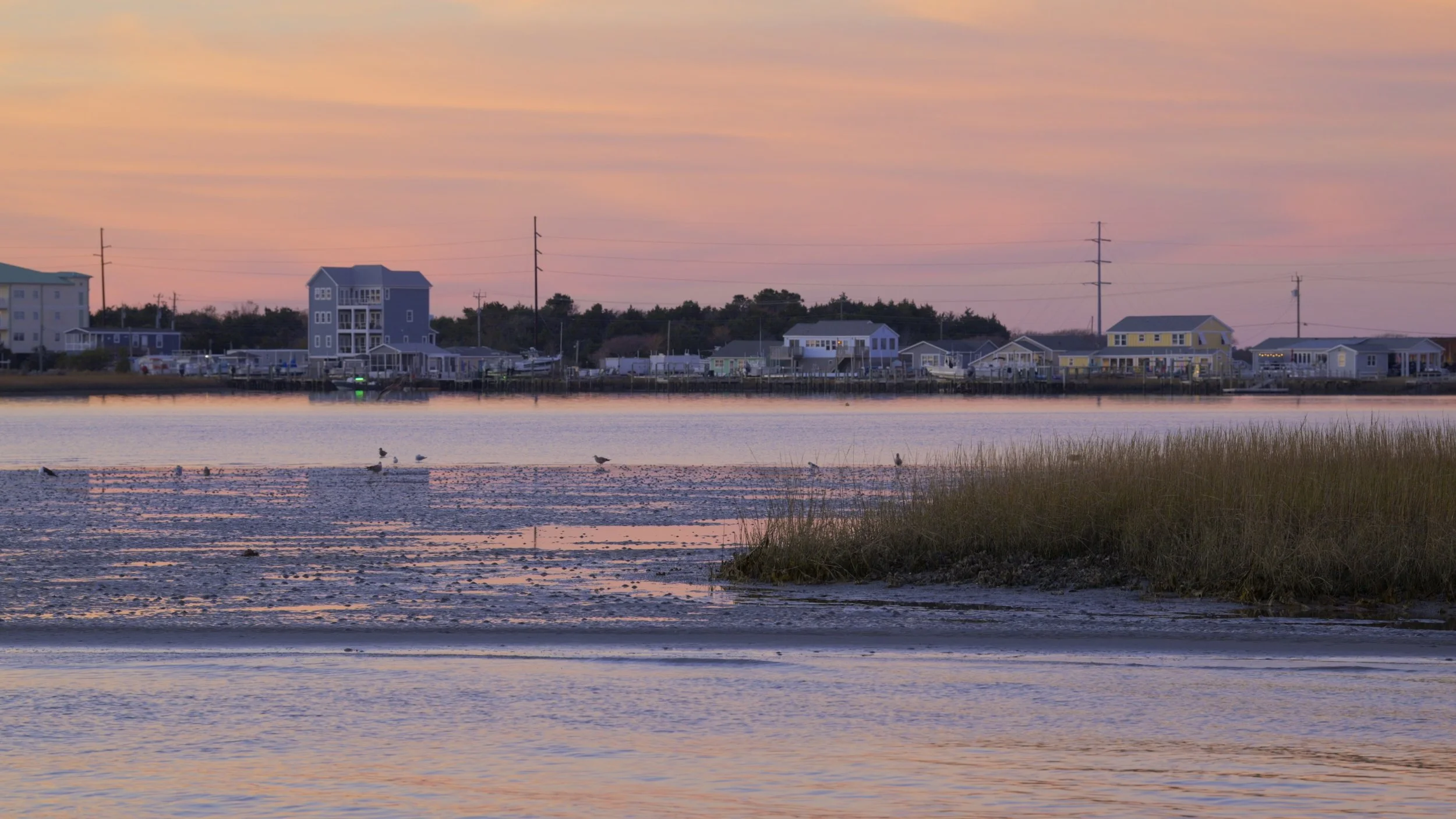
QUOTES

Dr. Carol Price | North Carolina State University Adjunct Faculty, North Carolina Aquarium Conservation Research Coordinator, Spot A Shark USA Project Manager
“The best science is done in collaboration with other smart people who have skillsets and interests that are different from your own … When we all put our resources together, we can do these amazing scientific projects that none of us could do just on our own.”

Iileyah Braxton | North Carolina State University Student, Spot A Shark USA Researcher
“ With the research that I've done as well as inputting myself going diving with them might bring out a completely different outlook: (sand tiger sharks) are not as aggressive as you might think.”
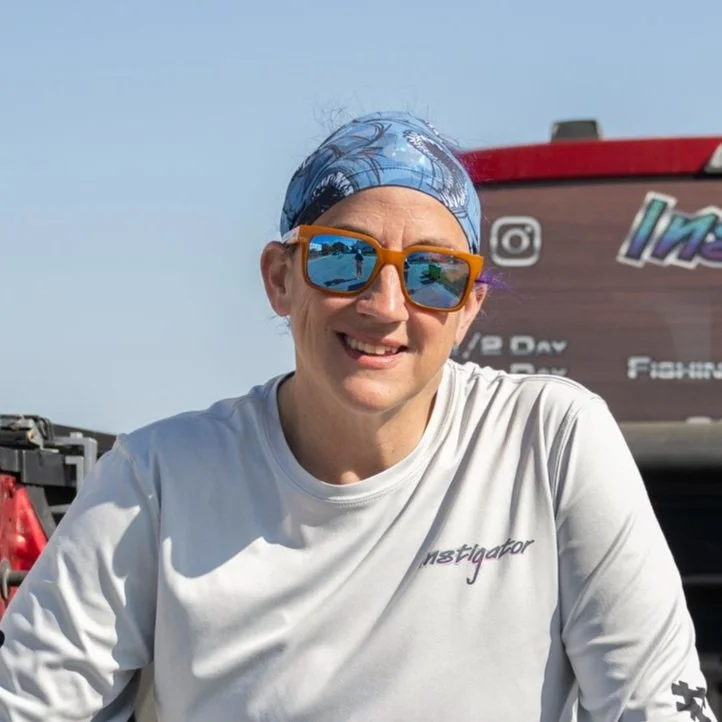
Cindy Garb | Boat Captain & Diving Instructor at Instigator Fishing & Diving Charters
“I love what we have to offer here in my very own backyard. My backyard being the Atlantic Ocean off of North Carolina, 'cause we have so much for people to see here.”

PROJECT BEHIND THE FILM
Sharks in a Changing Sea began as a research project within the Master of Environmental Management program at Duke University, which was designed to document how North Carolina’s diving community contributes to our understanding of sand tiger sharks (Carcharias taurus), a vulnerable and understudied species.
The core of the research involved conducting qualitative interviews with eleven local stakeholders—including charter captains, dive instructors, marine scientists, and museum educators—whose knowledge stems from decades of observing these sharks in the wild. Drawing from first-hand accounts, the project aimed to capture ecological insights on site fidelity, behavior, seasonality, and regional shark populations—observations that often fall outside the scope of traditional scientific studies.
While the final film tells a story of human-ocean connection, the foundation of the work is grounded in community-driven research. The accompanying written report offers a deeper dive into the methodology, interview findings, and broader implications for marine science and policy.
CREDITS
Directed by Lily Hanzheng Zhang
Featuring Dr. Carol Price, Bobby Purifoy, Leroy Craytor, Travis Dickinson, Iileyah Braxton, Dottie Benjamin, Cindy Garb
Cinematography and Underwater Videography by Lily Hanzheng Zhang
Impact Produced by Dr. Carol Price & Lily Hanzheng Zhang
Additional Underwater Photography by Bobby Purifoy, Dottie Benjamin, Cindy Garb
Additional Drone Photography by Maia Griffith (Duke University MaRRS Lab)
Map by Ara McClanahan (Price et al. 2018)
In association with Duke University Marine Lab and Spot A Shark USA
Special Thanks to Olympus Dive Center, Instigator Fishing and Diving, Discovery Diving, Graveyard of the Atlantic Museum, The Marine Robotics & Remote Sensing Lab
Special Thanks to Dr. Grant Murray, Molly Trivelpiece, Rafid Shidqi, Sally Dowd, Terry Leonard
Funding Support Provided by Joseph S. Ramus Endowment Fund