NET FOR ALL
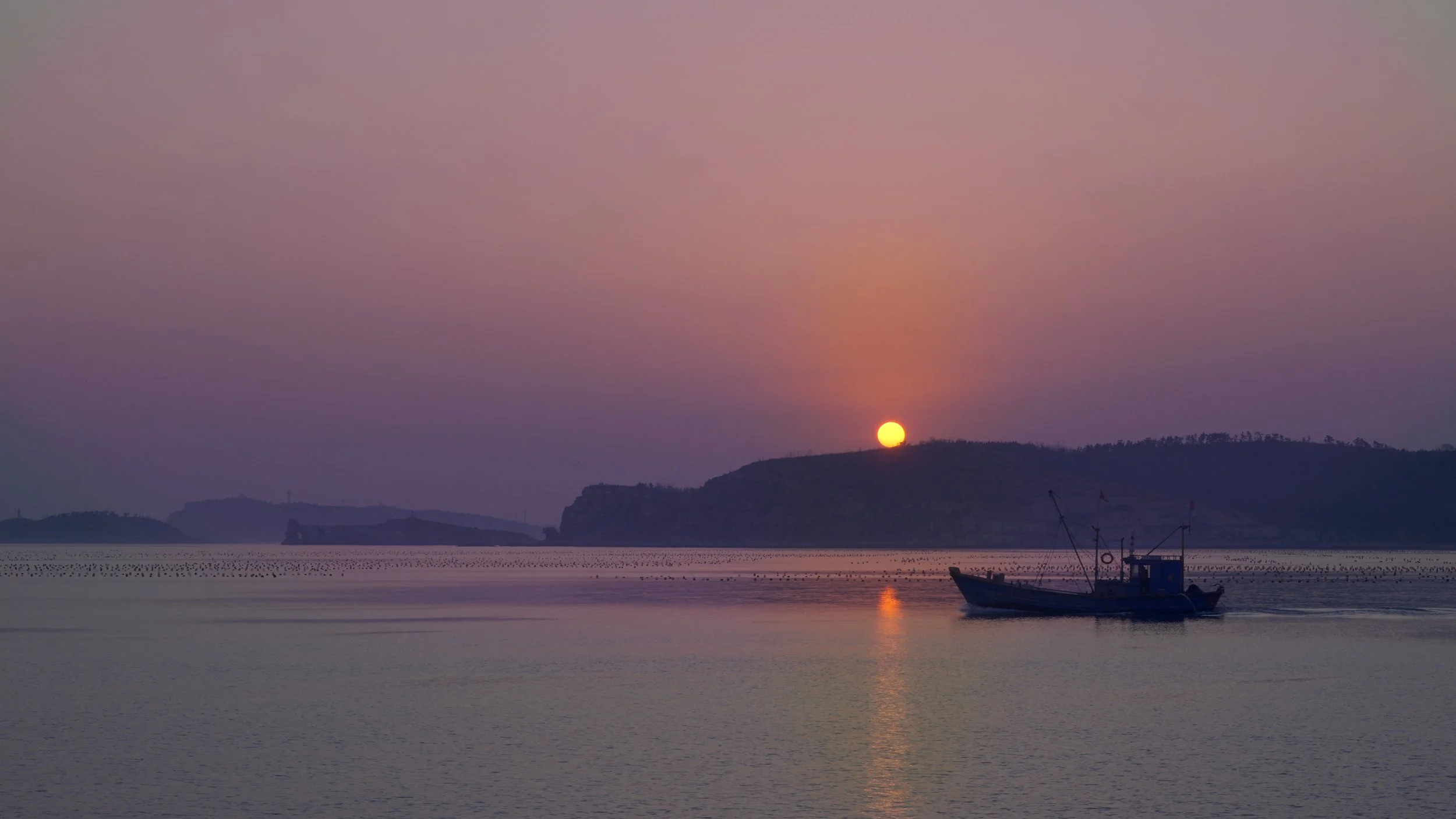
In the Changshan Archipelago, where the Yellow Sea meets the Bohai Sea, Captain Lu and the Qingdao Marine Conservation Society (QMCS) begin with a traditional stow net, searching for a new balance between East Asian finless porpoise conservation and fishing communities’ livelihoods.
在黄海与渤海交汇的长山列岛,卢船长和青岛市海洋生态研究会团队从一张传统坛子网开始,寻找东亚江豚保护与渔民生计之间的新可能。
Director & Cinematographer: Lily Zhang | Runtime: 04:58 | 4K UHD | Chinese Dialogue with English Subtitles | 2026
一网两全
PROJECT BEHIND THE FILM
The East Asian finless porpoise (Neophocaena sunameri) is a nationally protected species (Class II) in China. In recent years, fisheries bycatch has become one of the major threats to its survival. Drawing on research experience from China and abroad, the Qingdao Marine Conservation Society (QMCS), in collaboration with research institutions, fishing gear companies, and coastal fishing communities, has been working to modify and improve traditional Tanzi nets, also known as anchored stow nets. The project aims to explore a Porpoise Excluder Device (PED), designed to reduce porpoise bycatch while minimizing impacts on normal catches. It also seeks to develop a bycatch mitigation approach adapted to the fishing conditions of the Yellow and Bohai Seas.
The project was launched in 2025. The first pilot was conducted in Changdao, Yantai, and Langya, Qingdao. With expert consultation and fisher participation, the team tested a modified Tanzi net fitted with flexible netting. The design was tested through simulation experiments and sea trials. These tests provided an initial assessment of its feasibility in supporting both fishing operations and porpoise escape.
Building on this work, the project team carried out a second pilot in 2026. The PED design was further optimized: a flexible guiding net was added inside the Tanzi net, with an escape opening at the top; a cover net was used at the opening to reduce the risk of larger commercially valuable fish escaping. The trial net was then tested at sea paired with a traditional Tanzi net used as the control. Results suggest that the PED did not have an obvious impact on major target catches during the trial, and shows potential for further refinement and application. However, because no porpoise bycatch was recorded in either the trial net or the traditional net, the team was not yet able to directly assess whether porpoises could enter and escape through the device. The testing scale was also limited. Future work will need more systematic evaluation, using tools such as underwater video monitoring and acoustic monitoring.
QMCS will continue to explore fishing gear modifications that support both marine conservation and fishing livelihoods. The organization will also share the experience gained from modifying nets with fishing communities, local fisheries authorities, and other stakeholders. These efforts aim to provide practical experience and technical reference for the conservation of East Asian finless porpoises in China.
DIRECTOR’S STATEMENT
On Changshan Archipelago, a traditional Tanzi net weaves together many different meanings. For fishers, it carries a family’s livelihood. But for porpoises, it can mean injury, or even the loss of life. The same net also brought a group of people together: Captain Lu, the Qingdao Marine Conservation Society team, and many others who care about the ocean. Net for All documents how they began with a traditional net and searched for new possibilities between conservation and livelihood.
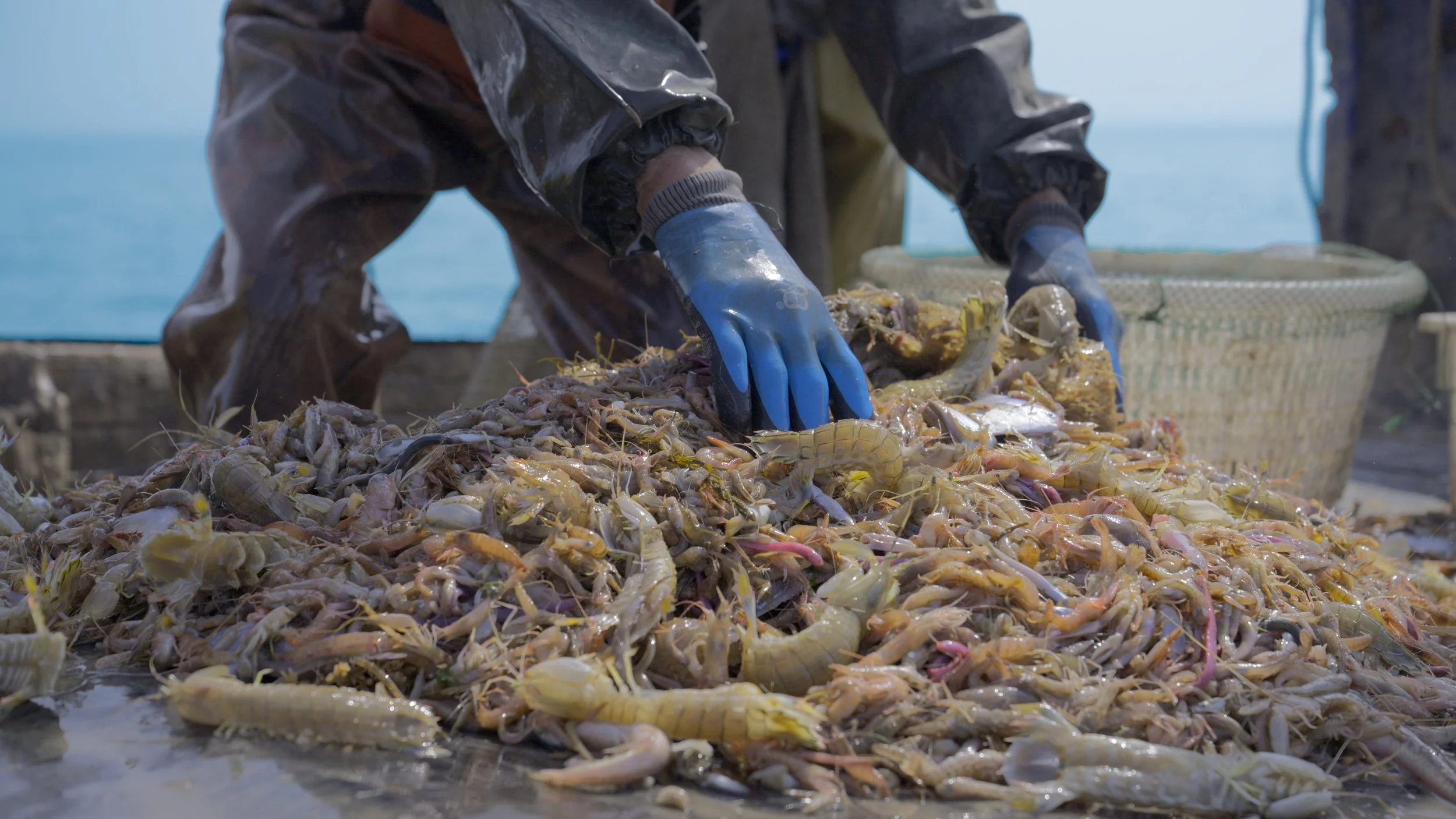
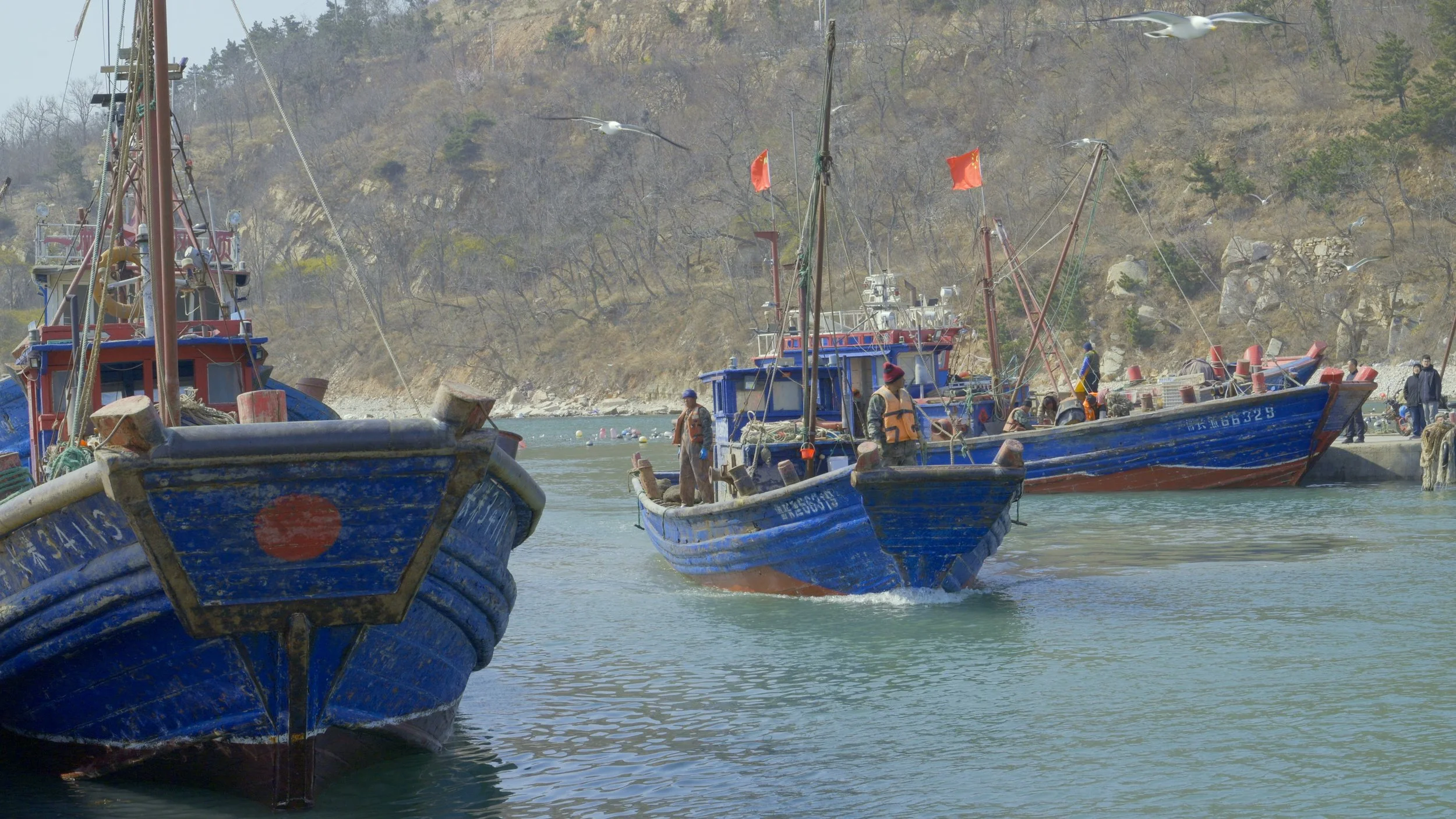
As someone from Qingdao, a coastal city close to our filming location, I grew up eating pomfret, mantis shrimp, and sea snails, but I rarely thought deeply about where the food on my plate came from. Filming this story brought me into the fishing community of Daheishan Island and Tudao Village. For the first time, I got to know fishers, and for the first time, I saw the process behind a fish traveling from the ocean to the table. For me, this was also a journey of rediscovering the relationship between people and the sea.
Through this experience, I began to ask myself: in the face of global environmental challenges, what do these specific, seemingly small conservation actions actually mean?
Jane Goodall, who devoted her life to nature conservation, once encouraged young people with these words: “You have it in your power to make a difference. Don’t give up. There is a future for you. Do your best while you’re still on this beautiful Planet Earth that I look down upon from where I am now.” As someone born in the 2000s, I often feel overwhelmed by environmental crises. The first twenty years of our generation have been marked repeatedly by melting glaciers, rising sea levels, and global warming. At the same time, biodiversity is being lost at an accelerating pace. The vaquita in the Gulf of California has been reduced to only a few individuals, while North Atlantic right whales continue to struggle against fishing gear entanglement and vessel strikes, and dugongs have become functionally extinct in southern coastal waters in China. Can we still find a path toward utopia? Where are the power, hope, and future that Jane Goodall spoke of?
Perhaps the process of making Net for All gave me an answer.
Power comes from these small but solid actions. Hope comes from the lives still swimming in the sea. And the future comes from fishers, researchers, and everyone who cares about the ocean. Let us continue to learn from one another, support one another, and move forward together on this long but meaningful journey of conservation.
CREDITS
Directed and Cinematography by Lily Hanzheng Zhang
Additional Footage from Lu Debao
Special thanks to experts participated in the PED project, including
PED Guiding Nets Design: Dr. Li Yuyan, East China Sea Fisheries Research Institute, Chinese Academy of Fishery Sciences
PED Guiding Nets Preperation and Installation: Yue Hongming; Zhejiang Leda Netting Co., Ltd. (Zhoushan Blue Whale New Materials Technology Co., Ltd.)
Trial Implementation Support: Lu Debao, Yin Chunxian, Song Xinghua, Kong Xiangli, Yin Shijun
Lab Analysis: Professor Tian Yongjun’s Group, Ocean University of China
Special thanks to WildAid
Produced by Qingdao Marine Conservation Society (QMCS)